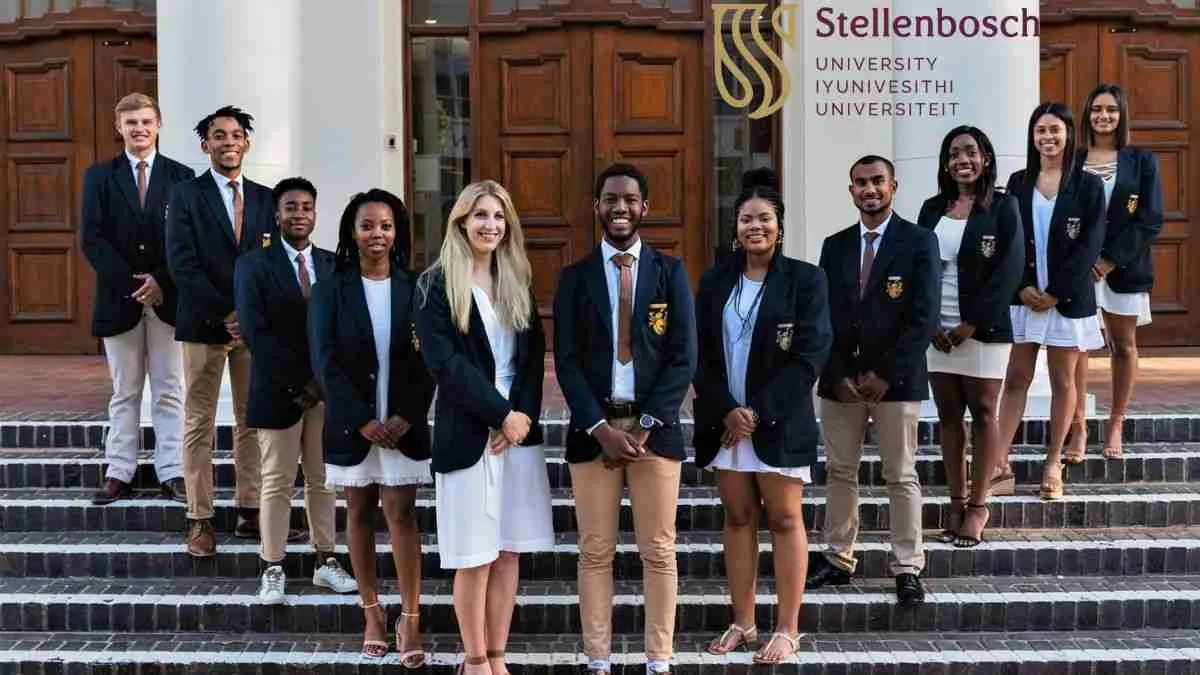
Mastercard Foundation has partnered with Stellenbosch University and the Institut Pasteur de Dakar to create a $9 million fellowship aimed at empowering African scientists in the fields of epidemic and pandemic response.

The African STARS Fellowship Programme will support 131 fellows over the next three years, according to Stellenbosch University’s announcement.
This initiative prioritizes inclusivity, with a focus on gender equality. The goal is to ensure that 60% of the trainees are young women, addressing the gender gap in science and technology.
“This programme has been designed with the core aim of nurturing the continent’s new healthcare research leaders and creating a skilled workforce in genomics, diagnostics, and vaccine design and production in Africa,” said the university.
The programme will feature two structured master’s programs, each lasting two years. One will be a Master in Business Administration (MBA) focused on Health Care Leadership, and the other will be a structured Master’s in Pathogen Genomics and Bioinformatics.

Additionally, two short-term fellowship programs will be offered: the Advanced and Translational Training (ATT) programme, a four-to-six-month course focusing on genomics, public health analysis, and vaccine manufacturing, and the Young Professional Programme (YPP), a 12-month course focused on biotechnology innovation and entrepreneurship, including placements at commercial companies or innovation hubs.
Despite being home to the world’s fastest-growing youth population, Africa faces challenges in developing enough scientists. The continent also bears a disproportionate burden of health crises, such as frequent outbreaks of diseases like HIV, Ebola, and Tuberculosis. In 2023 alone, over 150 disease outbreaks were reported across the continent.
This fellowship aims to address these challenges by building a skilled workforce of leaders who can effectively engage in public health efforts and advance research and development in Africa. Stellenbosch University has highlighted that previous fellowship programs, in partnership with organizations like the Rockefeller Foundation and the European Commission, have already trained 600 fellows in critical areas such as genomics and bioinformatics.
“The African STARS fellowship will now take training in Africa to the next level by creating structured programmes and providing up to two years of training,” the university said, aiming to attract talented scientists to stay and work in Africa.
Tulio de Oliveira, director of the Centre for Epidemic Response and Innovation at Stellenbosch, called the fellowship a commitment to developing the next generation of scientific leaders. He pointed out that the last decade has seen significant investment in African science and technology, with African researchers even leading the world in discovering the Omicron variant of COVID-19.
“Now, we need to invest in the research and development ecosystem to create our own diagnostics, vaccines, and therapeutics,” said Oliveira.
Solomon Zewdu, senior executive at Mastercard Foundation, added that the fellowship is designed to increase the employability of African youth in high-skilled roles traditionally filled by foreign-trained professionals, while also generating more job opportunities within the continent.
The Students Forum Nigeria serves as the ultimate hub for Nigerian students, fostering academic growth, social engagement, and knowledge sharing.