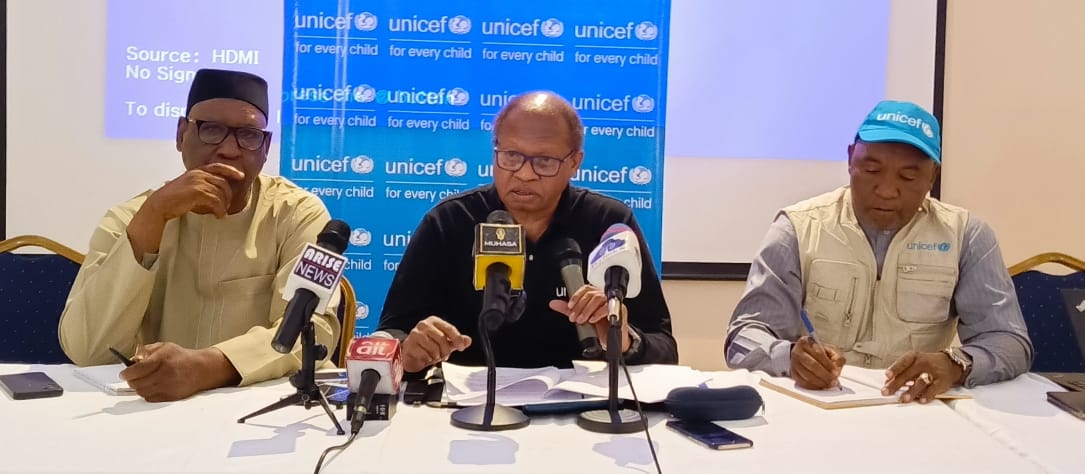
UNICEF has raised alarm over the dismal state of education in Kano State, revealing that only 9.6% of primary school pupils demonstrate reading proficiency, while 11.2% possess basic numeracy skills. Rahama Mohammed, UNICEF’s Chief of the Kano Field Office, shared this during a news conference marking the 2025 International Day for Education in Kano.

Describing the theme of this year’s event, “AI and Education: Preserving Human Agency in a World of Automation,” as highly relevant, Mohammed stressed the urgent need for increased investment in education to address the crisis.
According to data from the 2021 Multiple Indicator Cluster Survey (MICS), nearly one million children in Kano—about 32% of the primary school-age population—are out of school. In response to this alarming situation, UNICEF has been spearheading educational reforms, including the integration of Quranic schools into the formal education system.
“As part of this initiative, UNICEF has developed an integrated curriculum and trained over 290 Mallams and proprietors of Quranic schools in Kano and Jigawa states. These efforts aim to ensure children in these schools receive basic education alongside their religious studies,” Mohammed stated.
Efforts to improve school infrastructure have also been a key focus. UNICEF has emphasized climate-resilient infrastructure and the construction of Water, Sanitation, and Hygiene (WASH) facilities. These interventions have benefited 39,432 children—19,810 boys and 19,622 girls—through projects in 33 schools across Kano and Jigawa states. Improved facilities have contributed significantly to student well-being and retention.

UNICEF has also implemented programs to enhance the quality of education. Over 1,109 teachers have received professional development training in areas like Reading and Numeracy Activities (RANA), Early Childhood Development, and HASKE, a program designed for non-formal Quranic schools. In addition, UNICEF has distributed over 630,000 teaching and learning materials to support early childhood and primary education across the state.
Mohammed expressed gratitude to partners like the European Union for its role in the Education and Youth Empowerment (EYE) Program, as well as the Foreign, Commonwealth, and Development Office for supporting the CRIBS project in Kano and Jigawa states.
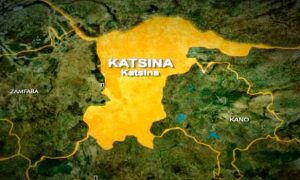
UNICEF reaffirmed its commitment to collaborating with state governments to improve basic education outcomes, emphasizing its ongoing partnership with Kano, Katsina, and Jigawa states to build a better future for children through education.
The Students Forum Nigeria serves as the ultimate hub for Nigerian students, fostering academic growth, social engagement, and knowledge sharing.