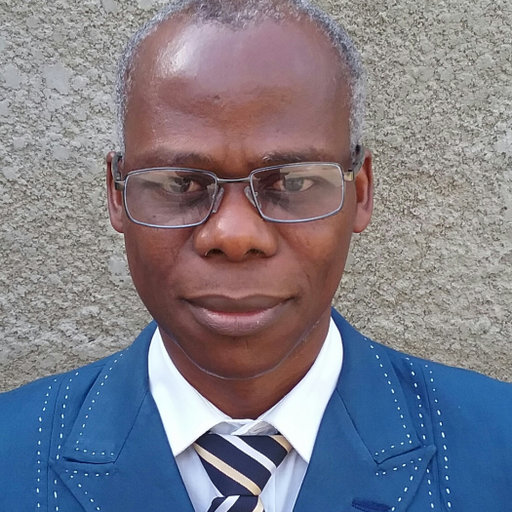
Professor Niniola Ife-Oluwa Akinwande, a renowned mathematician and Fellow of the Nigerian Mathematical Society, has spent decades contributing to academic growth in Nigeria. In a recent conversation, he shared deep insights on the ongoing brain drain, the state of education and healthcare, and why developing local solutions is key to solving Nigeria’s challenges.

He believes that depending on foreign aid, especially for major health issues like HIV/AIDS or Lassa fever, is not a sustainable path for Nigeria. According to him, “You cannot depend on aids. Aids tie the receiver to the donors because whosoever gives the piper, will [call] the tune.” He emphasized that Nigeria is not poor but simply not harnessing its abundant resources—both human and natural.
On how to reverse the trend of emigration, especially among healthcare professionals and academics, Prof. Akinwande made it clear: when people are made comfortable and secure in their own country, they won’t be so quick to leave. “If there is security and people are relatively comfortable, I am sure they won’t troop out of the country… That is the major challenge.”
He also addressed the costly trend of medical tourism among the Nigerian elite, calling it a misplacement of priorities. He pointed out that the same Nigerian doctors treating patients abroad could just as well do so at home—if only the facilities were up to standard. “There is no ailment that cannot be treated in places like the University College Hospital, Ibadan… If there is political will, even 10 percent of what is spent on medical tourism can fix our hospitals.”
For him, the solution lies in political will, infrastructure, and valuing local expertise. “In the developed countries, you don’t have to worry about electricity, water, or internet. You have minimum comfort around you; so you are able to focus on what you are doing. But our own situation is not like that in Nigeria.”

Reflecting on the past, he recalled a time when Nigeria’s university system had some stability. “In the early 1990s, you could stay overnight in your office because there was light, water, and security. Now, most institutions can’t even accommodate their students, and lecturers work under harsh conditions.”
As someone who has stayed in Nigeria despite opportunities abroad, Professor Akinwande feels strongly about staying back and giving back. “I have been to the USA, Kenya, Italy… and I came back. It is unfortunate that many are forced out. But once you leave, you become a second-class citizen. There’s dignity in contributing to your own country.”
He is currently focused on mentoring the next generation of scholars through a research group that spans several universities. His message to young academics is simple yet powerful: “Nigeria belongs to us; we should make up our minds to contribute our quota… In the long run, there will be the place of money and there will be place of dignity and honour. There is honour and dignity in academics.”
He firmly believes that Nigeria has the brains and the potential—it just needs an environment that supports growth. “We just wish that the environment can be better, that people can be well taken care of across board, in medicine, engineering, academics… What works in America may not work in Nigeria. Local problems need local solutions.”
The Students Forum Nigeria serves as the ultimate hub for Nigerian students, fostering academic growth, social engagement, and knowledge sharing.