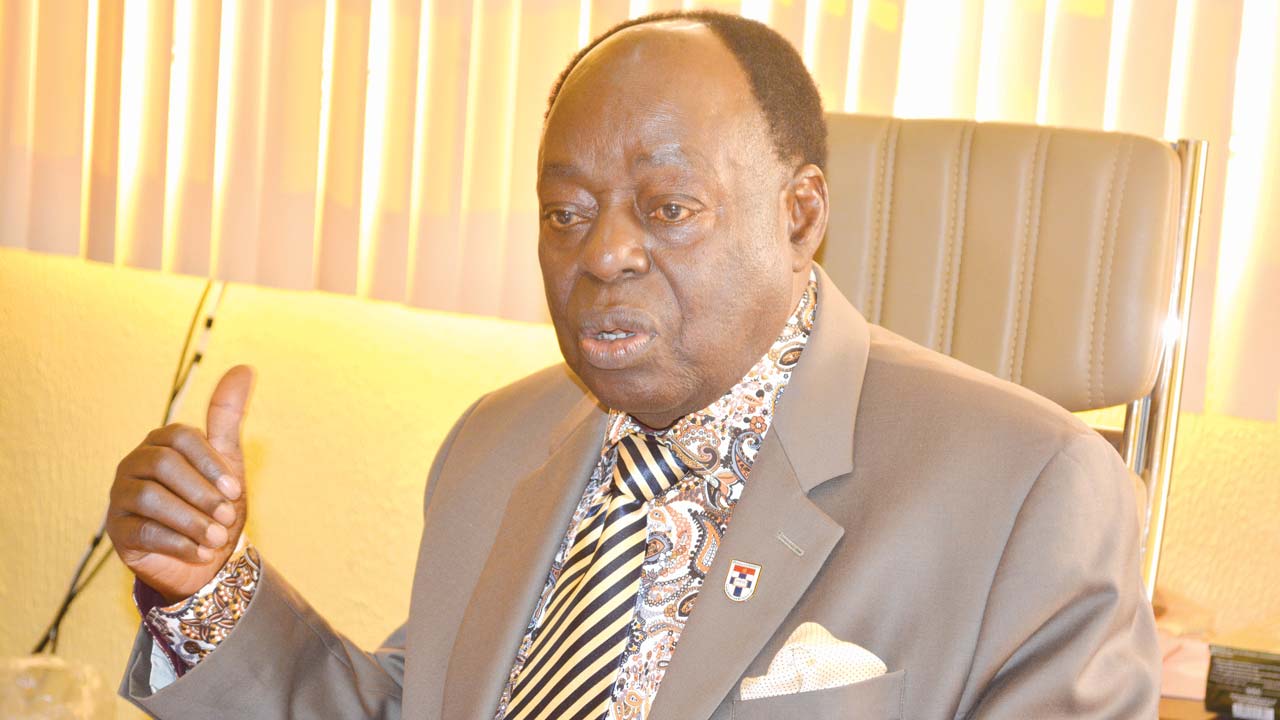
Legal luminary and education advocate, Chief Afe Babalola (SAN), has voiced strong concerns about the Federal Government’s continued approval of licenses for new universities across Nigeria. According to him, the trend, if unchecked, could have long-term consequences for the quality of education and the nation’s future.

Speaking during a High Impact Research and Journal Advancement Workshop hosted by Afe Babalola University in Ado-Ekiti, the founder didn’t mince words. He warned that the growing number of universities—many of which lack the necessary infrastructure and academic depth—poses a serious threat to Nigeria’s education system.
“Approving establishment of universities without consideration for quality and infrastructure could adversely affect the country in the future, if not stopped immediately,” he said.
Babalola recalled how, during the time of Prof. Peter Okebukola as Executive Secretary of the National Universities Commission (NUC), getting approval for new universities, especially for programmes in Medicine, Engineering, and Law, was a rigorous and transparent process.
“Not only was the visitation and accreditation process rigorous, it was also impossible for anyone to obtain approval to commence degree programmes, especially in Medicine, Engineering, and Law, especially in the first few years of establishing a university. But what do we have today? Mass approval of mushroom and substandard universities, with some lacking even the basic learning facilities and infrastructure,” he noted.

He lamented that the current system had weakened the NUC’s ability to maintain academic standards, describing it as an “anything goes syndrome.”
“As a result of this anything goes syndrome, approach to university licensing and accreditation, NUC’s ability to ensure quality control, and to stamp out substandard institutions, have been seriously compromised,” he added.
Babalola pointed out that while Nigeria currently has over 270 universities, more than 200 proposals are still awaiting consideration at the National Assembly. The focus, he believes, has dangerously shifted from quality to quantity.
“The end result is a rapid decline and rot of our educational system, and in the quality of our graduates. What we need is quality education, because poor education is worse than illiteracy,” he emphasized.
He further stressed that true national development, particularly through research and innovation, cannot happen if the country continues to license subpar institutions.
“If we are really serious about accelerating national development, through research, the starting point will be that the process of approval for university licenses should be thorough,” he said.
Meanwhile, in an effort to increase access to higher education, the Federal Government has been approving both federal and private universities at a rapid pace.
Earlier this year, President Tinubu signed bills establishing the Federal University of Agriculture and Development Studies in Osun State and the Federal University of Technology and Environmental Sciences in Ekiti State. Another institution, the Federal University of Environment and Technology in Ogoni, Rivers State, was approved in February 2025.
In March 2025, 11 private universities also received provisional licenses from the Federal Executive Council. The goal, according to officials, was to meet rising demand and expand tertiary education options across the country.
However, responding to growing concerns, the government recently imposed a one-year moratorium on approving new private universities. This pause will give the NUC time to review and strengthen its guidelines to ensure future institutions meet minimum standards before operating.

The Students Forum Nigeria serves as the ultimate hub for Nigerian students, fostering academic growth, social engagement, and knowledge sharing.