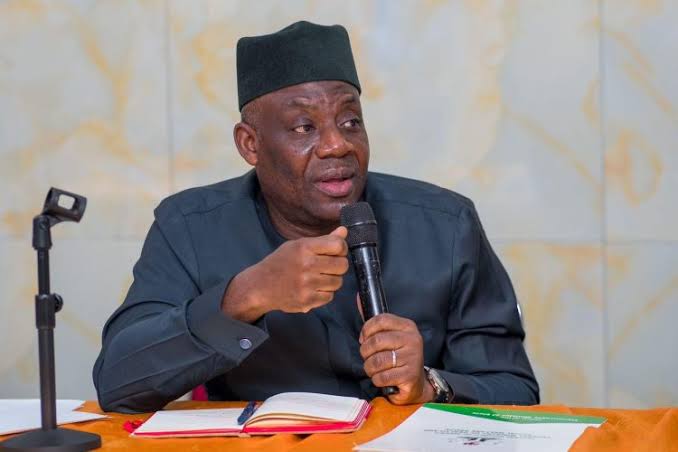
The Federal Government has taken a major step towards establishing a dedicated Armed Forces College of Medicine and Health Sciences, with the Minister of Education, Tunji Alausa, inaugurating a technical working group on Friday to fast-track its take-off.

The proposed institution is designed to address what officials described as a critical 93 percent deficit in medical personnel within the Nigerian Armed Forces, a gap that has long forced the military to rely on civilian universities for healthcare professionals.
Alausa said the college is targeted to admit its first set of military medical cadets during the 2026 academic session.
“We cannot continue to leave the brave men and women defending our nation without a sustainable system for training the healthcare professionals they require,” the minister said.
The proposed college will train doctors, nurses, pharmacists, and allied health professionals specifically equipped for Armed Forces operations, including battlefield medicine, emergency response, rehabilitation, and peacekeeping medical support.
Chairman of the technical working group, Idris Solebo, revealed that the institution is modelled after the Uniformed Services University in the United States, where students will undergo integrated military and medical training from admission through to graduation.
Solebo disclosed that the college will be located at the Nigerian Army Reference Hospital in Kaduna, taking advantage of existing infrastructure to speed up the commencement of academic and clinical activities.
The minister noted that priority will be given to courses including occupational therapy, speech therapy, and rehabilitation sciences, stressing that every programme offered must directly address the healthcare needs of the Armed Forces and not duplicate what is available in conventional universities.
Alausa also used the occasion to highlight the broader progress recorded in medical education under the current administration. He disclosed that annual admissions into Medicine and Dentistry rose from about 5,000 before the Tinubu administration to 10,405, with the government targeting at least 20,000 admissions within two years.
Annual enrolment into nursing programmes also jumped from approximately 28,000 to nearly 120,000 nationwide, surpassing government projections.
The technical working group comprises representatives from the Federal Ministry of Education, the Ministry of Defence, the National Universities Commission (NUC), and relevant professional regulatory bodies. The committee is tasked with developing curricula, coordinating accreditation, integrating military and medical training, and facilitating staff recruitment.
Alausa confirmed that JAMB has been engaged to include the new institution on its admissions portal, while the NUC has been directed to fast-track accreditation processes to avoid unnecessary delays before the pioneer intake.

Digital Operations Manager at The Students Forum Nigeria.